A well-styled shelving unit can do more for a room than almost any other piece of furniture. It holds the books you love, the ceramics you’ve collected and the plants that bring a room to life, and it does all of it at eye level, where everyone notices.
Yet shelves are also one of the hardest things to get right. Too little and they look unfinished. Too much and they quickly tip into clutter.
Whether you’re styling a tall bookcase in the living room, an industrial shelf unit in a home office or a low bookshelf beneath a window, these shelf decor ideas will help you create shelves that feel considered, personal and easy to live with.
Start with the right shelving unit
The shelving itself sets the tone for everything you put on it, so it’s worth thinking about before you start arranging.
A characterful timber such as teak, mango wood or oiled oak brings warmth and texture of its own, which means the styling can stay relatively simple. Visible grain and natural variations in colour do a lot of the work for you.
Open designs with staggered compartments, like our Tall Rustic Teak Open Shelving Unit, create natural frames for your objects. Classic tiered units give you long, even shelves that suit books and repeated groupings.
If you’re still choosing, browse our wooden shelving units and bookshelves, from low ladder-style shelves to tall six-tier designs.

Clear everything off first
It sounds obvious, but the best way to restyle a shelf is to empty it completely.
Take everything off, give the shelves a dust and look at what you have. You’ll quickly see which pieces you love, which have simply accumulated and which might be better somewhere else in the house.
Group your pieces loosely by type before putting anything back: books, ceramics, frames, plants and baskets. It makes it much easier to judge the balance as you build the shelves back up.
Let books do the heavy lifting
Books are the backbone of most shelving, and how you arrange them makes a big difference.
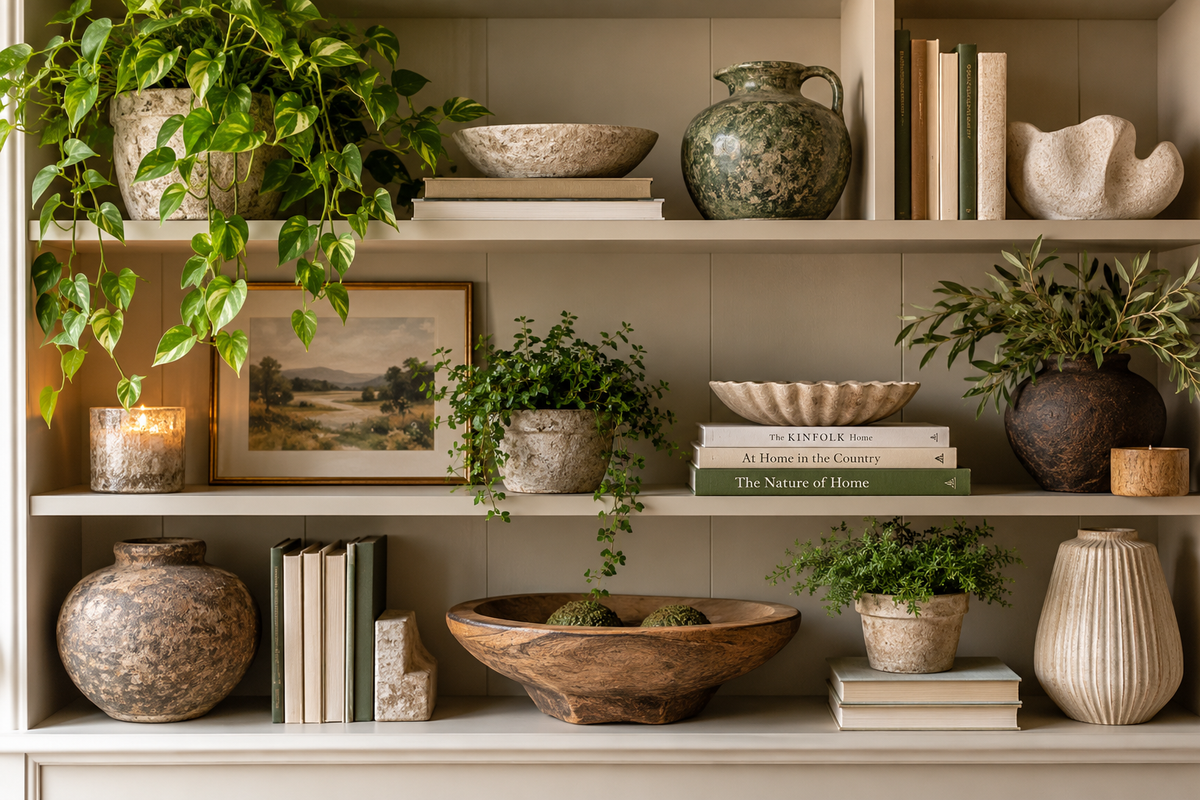
Rather than lining every book up vertically, mix things up. Stand some upright and lay others flat in small horizontal stacks. A horizontal stack also makes a perfect plinth for a small vase, candle or decorative object.
Arranging books by size or colour creates a calmer look, while a slightly mixed arrangement feels more relaxed and lived-in. Neither is wrong; it simply depends on the mood you want.
If you have a large collection, give the books their own shelves and keep decorative pieces to the shelves at eye level, where they’ll be seen best.
Group objects in odd numbers
One of the simplest shelf styling tricks is to group decorative objects in threes or fives rather than pairs.
Odd-numbered groupings feel more natural and less staged, encouraging the eye to move across the arrangement rather than stopping at a perfectly matched pair. Our guide to the 3-5-7 rule explains why it works so well.
Within each group, vary the height. A tall vase, a medium candlestick and a low bowl will always look more interesting than three pieces of the same size.

Mix textures and materials
Texture is what stops a shelf from looking flat.
Combine smooth glazed ceramics with rough stone, woven baskets with polished wood, and glass with natural linen. A few tactile pieces from our vases and pots or ornaments and candlesticks can turn a row of books into a display.
Try to keep a common thread running through it, whether that’s a colour palette, a material or a shape. Earthy neutrals, warm wood tones and soft greens work particularly well against natural timber shelves.
Baskets earn their place too. A couple of woven baskets on the lower shelves hide everyday clutter while adding another layer of texture.
Bring in some greenery
Plants soften the straight lines of a shelving unit and bring a sense of life to the room.
A trailing plant on a top shelf, with its leaves spilling over the edge, is one of the easiest ways to make shelves feel relaxed. A small potted plant tucked between books adds colour lower down.
If your shelves don’t get much natural light, or you’d rather not worry about watering, good-quality artificial plants give the same effect all year round.

Layer art at the back
Shelves aren’t only horizontal surfaces. The space behind your objects matters too.
Lean a small framed print or painting against the back of a shelf, then layer a vase or candlestick in front of it. This creates depth and makes the arrangement feel collected over time rather than placed all at once.
Smaller pieces from our wall art collection work well here, and propping rather than hanging means you can swap them around whenever you like.
Leave room to breathe
The most common shelf styling mistake is filling every gap.
Empty space gives each grouping room to be seen and stops the unit from looking cluttered. As a rough guide, aim to leave around a third of each shelf clear.
It also helps to stagger your arrangements. If a shelf has a tall group on the left, balance it with something lower or more open on the right, then reverse it on the shelf below. This gentle zigzag creates a natural rhythm up the unit.
When you think you’re finished, step back across the room and remove one thing. More often than not, the shelf will look better for it.
How to style industrial shelving
Industrial shelving units, with their mix of dark metal frames and timber shelves, have a strong look of their own, so the styling works best when it plays to that character.
Lean into contrast. Warm wood, rich leather, natural linen and plants all soften black metal beautifully, while matt black ceramics and aged brass pick up the industrial edge.
Our Forma 6 Tier Shelf Unit, with natural fir shelves and a black metal frame, is a good example. Its long, open shelves suit a mix of books, a few sculptural pieces and plenty of greenery.
Explore The Industrial Collection for pieces to sit alongside it, or read our guide to industrial furniture for more ideas on keeping the look warm rather than cold.

How to style rustic wooden shelves
Rustic shelving, whether in teak, mango wood or reclaimed timber, is all about celebrating natural character.
Keep the accessories simple and natural: stoneware, earthenware, dried flowers, woven baskets and well-loved books. Too many bright colours or high-gloss finishes can fight with the timber.
Pieces with an open-frame design, such as the Medium Rustic Open Bookcase, work beautifully with fewer, larger objects. Let a single sculptural vase or a stack of books sit in each opening rather than filling every compartment.
If you love the look of aged wood, The Reclaimed Collection has other pieces to build the room around.
Shelving ideas for every room
Shelves work hard all over the home, and the styling can shift a little depending on where they are.
For the living room:
A mix of books, ceramics, plants and a few personal pieces. If space is tight, a tall unit draws the eye upwards and makes the most of an alcove. Our small living room ideas have more on that.
For a home office:
Put function first, with books and files at hand height and baskets or boxes to hide paperwork. Keep decorative pieces to the top shelves.
For the hallway:
A low bookshelf can double as a landing spot for keys and post. Add a small lamp or a plant to make the space feel welcoming as soon as you walk in. Find more ideas in our hallway collection.
For the bedroom:
Keep it calm, with fewer objects, softer colours and a few favourite books.
For the kitchen and dining room:
Display everyday ceramics, glassware and cookbooks, keeping the pieces you use most within easy reach.

The finishing touch
The best-styled shelves are rarely the ones that follow every rule. They’re the ones that tell you something about the people who live with them.
Start with a shelving unit you love, build up with books, layer in texture and greenery, and leave space for everything to be seen. Then let it change over time: swap pieces with the seasons, add the things you pick up on your travels and edit out what no longer feels right.
Done well, a shelving unit becomes much more than storage. It becomes one of the most personal parts of your home.