
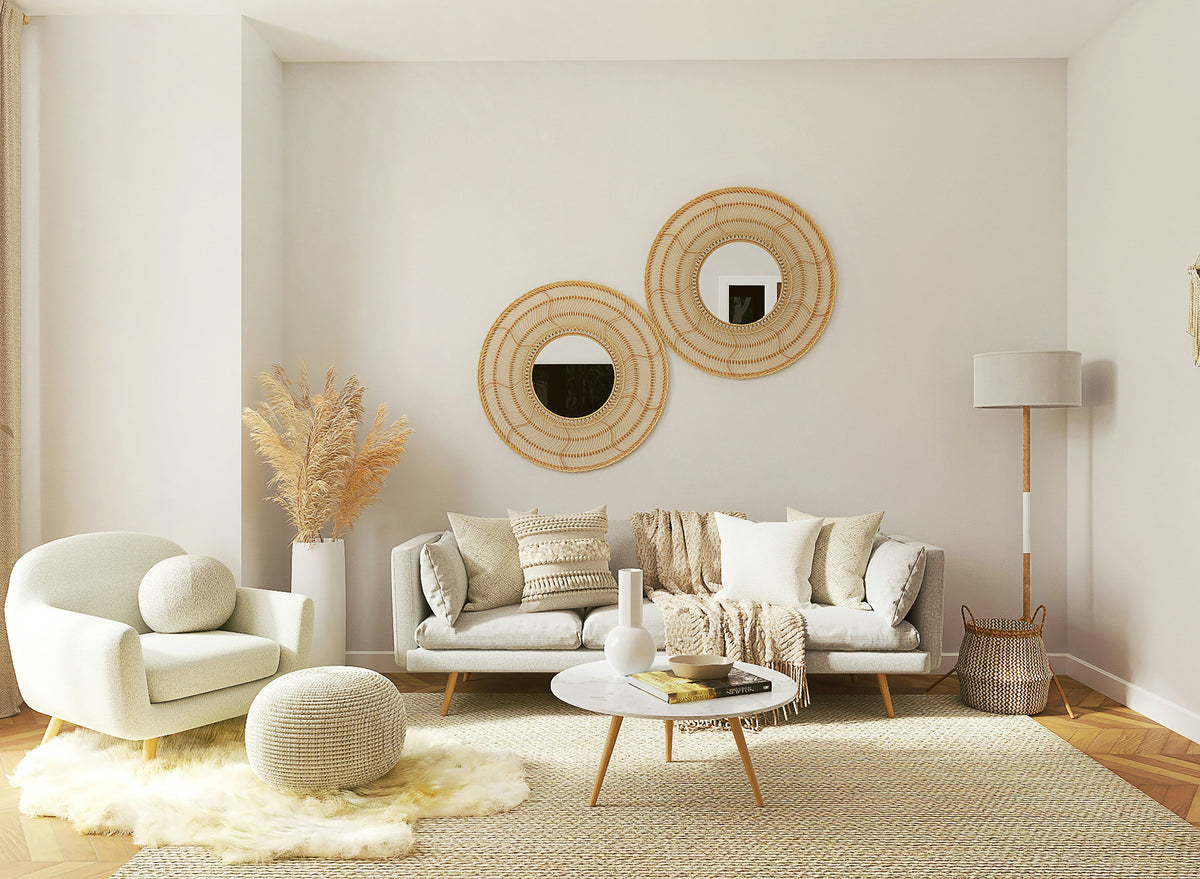
Designing a small living room can feel like a challenge, but with the right approach, it becomes an opportunity to create a space that feels both beautiful and intentional. A smaller footprint encourages thoughtful choices—every piece, texture, and colour has a purpose. With a few clever design ideas, you can transform even the most compact living room into a space that feels open, inviting, and full of character.

1. Start with a Light and Airy Palette
Colour plays a powerful role in how a room feels. Soft, neutral tones such as warm whites, gentle beiges, and muted pastels help to reflect light and create a sense of openness. This doesn’t mean your space has to feel bland—layering tones and textures within a similar palette adds depth without overwhelming the room.
If you want to introduce contrast, consider doing so through accessories like cushions, throws, or artwork rather than large furniture pieces.

2. Choose Furniture with Purpose
In a small living room, every piece of furniture should earn its place. Opt for designs that are both functional and visually light—think slim frames, raised legs, and open structures that allow light to pass through.
Multi-functional furniture is especially valuable. A coffee table with hidden storage, a bench that doubles as seating and storage, or a compact sofa bed can help you maximise usability without crowding the space.

3. Embrace Vertical Space
When floor space is limited, look upwards. Wall-mounted shelves, tall bookcases, and vertical storage solutions draw the eye up and make the room feel taller.
Floating shelves are particularly effective—they provide storage without the visual weight of bulky furniture. Styling them with a mix of books, ceramics, and natural elements creates interest while keeping the look balanced.

4. Use Mirrors to Create Depth
Mirrors are one of the simplest ways to make a small living room feel larger. Placing a mirror opposite a window helps reflect natural light around the room, instantly brightening the space.
A large statement mirror can act as both a functional piece and a focal point, while smaller mirrors grouped together can add texture and dimension.

5. Keep the Layout Open
Avoid pushing all your furniture against the walls in an attempt to create space—this can actually make the room feel more boxed in. Instead, try a slightly more relaxed layout, allowing pieces to “breathe” with small gaps between them.
Choose a focal point, such as a coffee table or rug, and arrange seating around it to create a sense of cohesion and flow.

6. Layer Natural Textures
Small spaces benefit from warmth and character, and natural materials are perfect for this. Incorporate wood, rattan, linen, and cotton to add texture without heaviness.
A woven rug, a wooden coffee table, or a rattan accent chair can bring softness and depth to the room, making it feel curated rather than cramped.

7. Let in as Much Light as Possible
Natural light is your greatest asset in a small living room. Avoid heavy curtains or dark blinds that block light—opt instead for sheer fabrics or light linen drapes that allow sunlight to filter through.
If privacy is a concern, layering sheer curtains with a heavier option gives you flexibility while maintaining brightness during the day.

8. Keep Clutter to a Minimum
A clutter-free space instantly feels larger and more calming. Be selective about what you display and focus on a few meaningful pieces rather than filling every surface.
Storage solutions like baskets, concealed compartments, and built-in units can help keep everyday items out of sight while maintaining a clean, considered look.

9. Add Personality Through Details
A small living room should still feel like yours. Personal touches—whether it’s artwork, books, or collected objects—bring life and individuality to the space.
The key is balance. Instead of spreading items throughout the room, create small styled moments—a coffee table vignette, a shelf display, or a cosy corner with a chair and lamp. Our guide to the 3-5-7 rule shows how to group them.

10. Think About Flow and Feeling
Ultimately, a well-designed small living room isn’t just about how it looks—it’s about how it feels. Aim for a space that feels easy to move through, comfortable to sit in, and inviting to spend time in.
By focusing on simplicity, thoughtful choices, and natural materials, you can create a living room that feels spacious, calm, and effortlessly stylish—no matter its size.
A small living room doesn’t limit your creativity; it refines it. With careful design and a clear vision, even the most compact space can become a beautifully functional and welcoming part of your home.
Feeling inspired? If you’d like help turning your own home into a space that feels cohesive, calm and beautifully styled, we offer a range of Interior Design Services tailored to different levels of support.
From curated product selections to full room design, we can help you bring your vision to life.